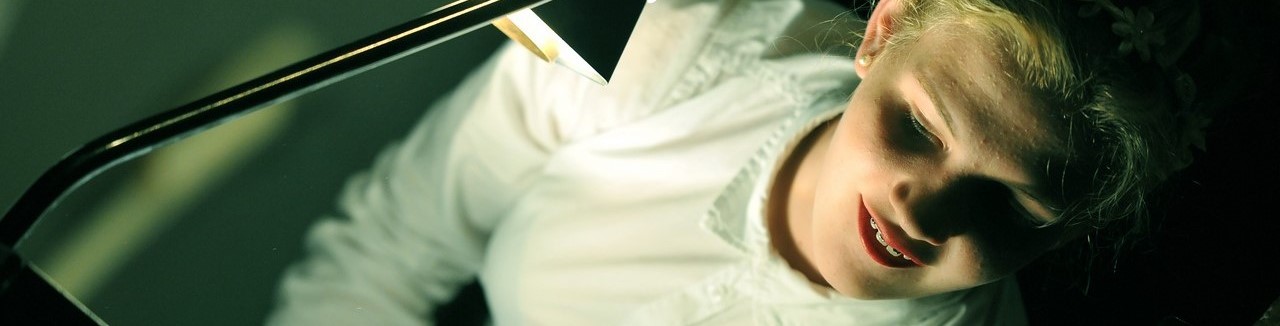


This time we speak with twenty-year-old Janko Poláček, who spent several years as an actor in our ensemble Vosí hnízdo. He is now in his first year at the Faculty of Humanities, Charles University.
Life as a puzzle
I perceive Janek as a person with a rich inner world—a philosopher, creator, and poet, in whom creation, philosophy, psychology, science, and experimentation intersect. He is drawn to transcendence, allows things to mature, and says that existing in a state of not-knowing can be liberating for a human being.
ABOUT FREEDOM
What does freedom mean to you?
It is the possibility to act or express oneself in a certain way. At the same time, it is a paradox, because there is always some form of limitation. Absolute freedom—where I could simply do whatever I want—is not possible. At the very least, we are bound by gravity, so we must stay on the ground; we cannot fly away. When people talk about freedom, they usually refer to what they are able to do. But freedom also involves sacrifice. If a person wants to be free, they must give something up. Order and freedom stand in opposition to each other. So when someone chooses freedom, they are also giving up part of order—and vice versa.
Are you talking about freedom as the freedom to give up one’s own freedom?
If I get up at 8 a.m. to go to work, then work, on one hand, gives me freedom. I can buy things, I don’t go hungry, it gives me connections, I can live where I want. But at the same time, it is a sacrifice. Instead of having the whole day free, I have to be somewhere for a certain amount of time. So I ask: does work give me freedom? Someone might say: “Of course.” What can you do without work? Do you have the freedom to starve? On the other hand, someone else might say: “Work is the greatest lack of freedom.” A person has to get up, be somewhere they don’t want to be, or do something they don’t actually want to do. They do it as a sacrifice for a vision of freedom, as they understand it. Some people believe that freedom means nothing is forbidden. But according to this view, I would also have the freedom to keep other people in slavery. Do I have the freedom to own slaves? Is it free to own other human beings? In doing so, I create the greatest form of unfreedom. I take freedom away from someone else. If I were, for example, a tsar in Russia, I might have all the freedoms, but society itself would not be free.
But as a tsar, I am not free, because I am afraid of losing my rule. I am a slave to my own fear.
Yes. On paper, as a tsar, I have absolute freedom. In reality, I do not. For example, a homeless person sitting on the street and begging may be more free than a tsar who can do everything, but is not free.
AUTHENTICITY
I’ll move on to another concept: authenticity. How do you perceive authenticity?
When nothing is being performed. Authenticity is not performance, but reality.
Is it important to you?
Yes, but sometimes it is difficult to recognize. When someone says, “Be authentic,” something is expected from the person. People often assume that being authentic means being down-to-earth in behavior or actions. But that doesn’t seem important to me. Authentic people are sometimes dramatic, but it comes from them spontaneously. That is what I perceive as authenticity.
RELATIONSHIP–COMMUNICATION–DIALOGUE
How do you view the concepts of relationship, communication, and dialogue?
It is about closeness and connection. By closeness, I mean more metaphorical than physical. It has something fateful about it. Connection has a certain value for me—like a relationship to music or to family. When I have a relationship to something, it becomes my own.
It means that you know it, or you want to get to know it. If you don’t have a relationship to something, you don’t need to get to know it. You don’t care.
It does not evoke an emotion or a strong reaction. If I show someone who has no relationship to cars the most interesting vintage car, they will say: “Well, that’s nice.” But they don’t feel it, they don’t really see it. It reminds me of The Little Prince, where people on the planets only had a relationship to things when they knew their monetary value. If I ask someone to imagine a large, beautiful brick house, they might say: “Yes, and so what?” But if I tell them it cost 100,000 francs, they suddenly have a completely different reaction. A relationship is when a person feels closeness to something beyond its financial value.
Each of us has an inner world that is specific, understood only by ourselves and by no one else. One person loves this, another loves that. But I have the feeling that these worlds are not trying to understand each other today. That we live in bubbles, in our own worlds, and we do not want to see the worlds of others; sometimes we reject them, we judge them.
It is good to have respect for people and for their worlds, even if I do not understand them. For example, I do not really understand Armenians or their world. It is not my own. If I tried to pretend that I understand their world, it would be insulting. It is more honest to admit that it does not speak to me much, because it is not mine and I do not have a relationship to it. But it is important not to consider my own world as a better one, or my point of view as superior. Of course, I do not mean situations where someone has an openly harmful inner world. In such cases, confrontation is important.
Do you mean some kind of humility towards others?
Respect. For example, towards other cultures. In settlements where people do not have electricity or running water and live in a completely different way of life than ours. But family relationships, for instance, may be very important to them. We might say: “That’s terrible. These children cannot live here without water and electricity.” But for them, it is their authentic life. So why is their life or perspective worse than ours? In what way are our values better than theirs? Just because we have electricity and water? At the same time, many people here are lonely and unhappy. They have it differently, but not necessarily worse.
When I have a completely normal conversation with people from a different social bubble and an ordinary human-to-human relationship emerges between us, those people are usually very grateful. But it seems to me that nowadays we are becoming increasingly separated and divided. Often, the more educated, more intellectual group of people is arrogant, dismissive, and degrades the dignity of less educated segments of society.
In a school seminar, we watched a documentary about people who wanted to help people living in settlements. They said: “You cannot let people live like this. It is terrible. You must let us bring them into a better world.” On one hand, I understand that living in such poverty is unimaginable, and people want to help them get out of it. On the other hand, it is their world. And coming to them with the attitude of “you are backward, we must civilize you” is actually quite harmful. But doing nothing and not caring is also not right. For example, there might be a musically talented child in the settlement who could play in world-class orchestras. But do we leave the child there just because it is their culture?
THE BANALITY OF EVIL AND EXISTENTIALISM
I will move on to the philosophy of Hannah Arendt. Her philosophy in The Banality of Evil is based on the idea that when a person does not think, and only follows orders, they can become an instrument of evil.
To think that something is right and yet not act is, from an ethical point of view, wrong. I can believe that discrimination is wrong, but if I only think about it and do nothing about it, then from an ethical perspective that is not acceptable. It is important to think, but thinking should lead to a certain kind of behavior and action. During the occupation in the Second World War, there was a soldier who shot only children, because another soldier was shooting mothers. The soldier who shot the children justified it by saying that he did not want children to live without their mothers. He created his own morality. He had a whole arsenal of, from his point of view, morally justifying arguments. He did not act thoughtlessly; he reflected on it and knew what he was doing. And he arrived at the conclusion that he would act in this horrific way.
It reminds me of Sartre’s philosophy, existentialism—that a person is only realized through their actions.
One theory of emotions suggests that emotions are reactions to a stimulus. And these reactions are quite similar. So there is not such a big difference between love and stress, or between love and fear. The physiological response is not that different. What matters, however, is how we see them—their interpretation, how we choose to view the situation. If I am under stress and I tell myself, “This is great,” it strongly shapes how I subsequently experience it. If we interpret emotions in a certain way, they can change the world as we perceive it. And then our decision about how we interpret the world reflects back on us.
What can be done so that a person does not remain stuck in a loop, but grows through further experience?
I remember an experiment with mice. It was quite brutal. The mice were placed in water and left to drown. They died after about three minutes. Then they did an experiment with a second group of mice. They let them struggle in the water for about two minutes, and then pulled them out. After some time, they were put back into the water again. And instead of drowning after three minutes, the mice kept fighting in the water for tens of hours before eventually dying. They were convinced that someone would pull them out again. Their will extended their survival. If we translate this to humans, if a person does not go through an experience of realizing that they can handle something, they will give up much more quickly. What we expect has a strong influence on our lives.
It makes me think of the psychological approach of logotherapy—the “will to meaning”—by the Austrian neurologist and psychiatrist Viktor Frankl. He was in a concentration camp and based his work on the idea that people in the camps had a greater chance of surviving if they had hope that they would make it through. They did not give up. Is this the expectation you are talking about?
Giving up is very important. But perhaps a person needs to have the experience of knowing that they can handle it. When someone goes through a certain experience and knows that they can make it, the second time they go through a similar experience, they have much greater willpower and perseverance. It will no longer be as difficult for them.
TALENT, THEATRE, AND DIALOGICAL ACTING
That brings me to our work, where we let children go through their own experience and grow from it. What was your personal experience with us at Talent?
I enjoy that in theatre a person can be themselves, express themselves, and step outside of categories. The theatrical space gave me the opportunity to release emotions. That I don’t have to represent an idea of myself or wear a mask, but I can genuinely be who I am. Theatre opened up self-knowledge for me.
What about you and Dialogical Acting?
I preferred watching people work in Dialogical Acting rather than doing it myself. I think everyone should try it. But for me, Dialogical Acting with the Inner Partner felt quite restrictive.
Restrictive? But Dialogical Acting is based precisely on the greatest freedom.
Exactly. That is where the restriction is. You cannot use props, play with the audience, or create something. It is meditative. That is what is great about it, but at the same time it is demanding. It is easier to tell a story, to improvise according to an assignment: here is a mat, you become an earthworm. In that I can update myself. But the freedom of Dialogical Acting is frightening. Yes, there are rules in Dialogical Acting, but they make things much more complicated. Freedom complicates everything.
Small children enjoy it.
It is difficult with teenagers. They are very afraid, they are afraid of freedom, they don’t know what to do without an assignment. They are lost in freedom. Freedom is “paralyzing.” A person is afraid. In the freedom of Dialogical Acting, it is like being in a desert. There is not much there; you can do whatever you want. And you don’t really know what that is.
I think that Vyskočil (Prof. Ivan Vyskočil, the “father” of Dialogical Acting) was aiming precisely for that—to give people absolute freedom to actualize themselves.
That is exactly what is empowering. When a person goes through a certain experience, like the mice, they are no longer as afraid and are not lost in freedom.
Through Dialogical Acting, a person stops being afraid of freedom, of the infinite possibilities they have.
That brings me back to Patočka (Jan Patočka, one of the most important 20th-century philosophers, spokesperson of Charter 77, who died after a brutal StB interrogation). He suggested that a soldier in peacetime, not knowing what will happen to him, is in the greatest form of unfreedom. He lives in stress about whether war will come. Or a soldier in war is faced with: will I go over the trench, or will I not? Is death waiting for me there? But in the moment when it happens—when he runs toward death—he becomes free. He no longer has to fear whether it will or will not happen. It is decided. It is extremely simple. Either I am hit or I am not; nothing more needs to be solved. And whether I am hit or not is no longer something I can influence anyway. If I relate this to Patočka’s life: before the StB knocked on his apartment door, he was in the greatest inner unfreedom. He was dealing with whether they would come, what would happen, what would become of him. The moment they were already there, he no longer dealt with anything.
What is conscience for you?
It is our actions, our limitations, and our movement forward. A voice that says: you should not do this, you should do this. A kind of ethical code. It is like an audience inside us that transcends the individual and is shared by all human beings.
WRITING, STUDY, FUTURE
You are involved in our newspaper Dialog, you are part of the editorial board, and you enjoy writing.
For me, it is a form of relaxation—to construct things in my mind, to create stories, narratives, and images. I put on music, start typing, and things begin to emerge. Then I read the text, and it is never as good as the process itself. I enjoy the process of writing much more than what ultimately comes out of it.
You are studying at the Faculty of Humanities at Charles University. Why this faculty in particular?
I like approaching things in a more holistic way, from a broader perspective. When I study the basics of anthropology, sociology, and philosophy, it gives me a wider view than if I were studying a single discipline. There are also good teachers, because they teach what they are genuinely interested in. Through teachers who are absorbed in their own interests, and through different perspectives and subjects, my horizons expand, as do the possibilities of what I might dedicate myself to in the future.
How do you see the world? And how do you imagine your future life?
How to kill any philosophical debate is to start talking about how I see my future. I think we are very blind. We don’t know anything even about how things are right now. We are not even able to distinguish optical illusions from reality; we don’t know how far away the stars are. We don’t know anything, and we know even less about the future.
People think they know and that they must know.
The fact that we are blind and do not know anything is, for me, liberating. Looking at the future, not knowing what I will be doing in ten years… It is not about thinking that somehow it will all turn out fine. But in the sense that if I were living in Ukraine, everything would be different. I would not be able to imagine what I would be doing in ten years—I would simply be in the army. Or a new technology might emerge. How will I exist in that in ten years? Of course, one can be afraid of this, but for me it is liberating. It is liberating to accept that things and the future are not under control. One simply tries to do things as well as possible with what one has. That is how I would like to live. I would like to be the best I can be in whatever comes, whatever reaches me. It is important to enjoy existence as such. I do not know what is, what will be, I know nothing. But it is still fascinating. To take life as a puzzle.
We come full circle back to not-knowing in Dialogical Acting with the Inner Partner.
It is good not to approach Dialogical Acting—or life—in a way that says: it is terrible that I don’t know, and I am stressed about what I will do. Instead, it is better to enjoy not-knowing as an experience in itself. To see new situations, new possibilities, freely. Not as an injustice or burden.
Final question. You have freedom. Create a world you would want to live in.
It would be similar to this world. I would like it if there were a machine that would allow a person to see the beauty of the world. If I could put myself in another person’s place and feel, see, and experience what they do. For example, to see a dinosaur through the eyes of a paleontologist. Or to see the world as a fly sees it. What is it like to be a fly? To enter the worlds of other people and beings.
Thank you for the interview.
Erika Merjavá