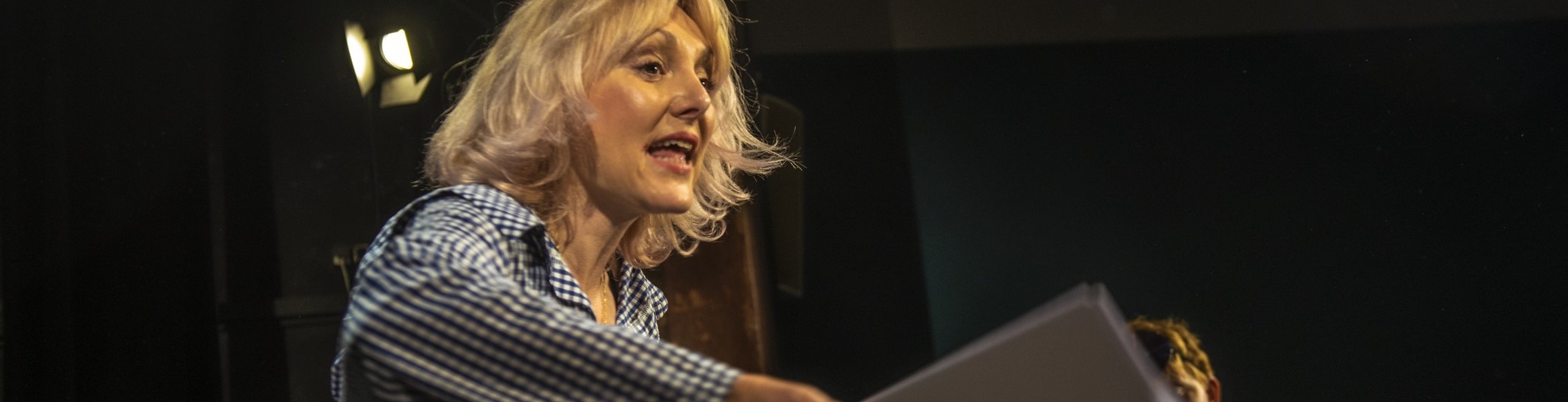


This time with our alumna, Lada Marková, a psychology student at Masaryk University.
Childhood is a sensitive period—vulnerable, difficult, and, in a way, unfair.
When I do interviews with our former students and pupils, I am always fascinated by where they have ended up—what they are studying, and where their searching, determination, persistence, and depth have taken them. Lada is studying psychology for a semester in Istanbul as part of Erasmus. We connected via video conference and talked mainly about children, studies, sadness, but also the hopes of the younger generation. When I talk to her, I feel that her golden star is located deep in her heart.
How do you like your studies in Istanbul?
It is a very interesting place. Huge, vast, full of people and chaos. Everyone is trying to do something, to get somewhere. It feels very alive here. In Istanbul, many different cultures and atmospheres come together. It is interesting to touch all of that, to try it, to discover it. And in doing so, I am also discovering myself. It is quite self-exploratory.
I admire your childlike curiosity, curiosity, creativity, and sense of wonder. Have you always been like that?
As a small child, yes—at least according to my parents. Then I lost it for a while. It opened up again through theatre. When I came to TALENT, I was in puberty. I needed to understand myself and my relationships with my peers. I was lost in relationships and within myself. I didn’t feel I could freely explore or be myself. So part of why I even sought out theatre was that I needed to return to freedom, to find my own identity, and to discover what it actually means.
What can cause a disconnection from oneself?
For me, it was the eight-year grammar school. At around ten or eleven, you leave a group you know from primary school and go somewhere else. Everything shifts and changes. I wasn’t able to form new relationships with peers while also maintaining the old ones. Another thing is that schools are set up around a standardized, measurable path. I miss the development of curiosity and freedom in them. We want every child to go through the system and receive a basic education, but then self-development is often missing—developing the ability not only to answer questions, but also to ask them, to be curious, to create one’s own activities. At the grammar school I attended, whenever someone came up with something they wanted to do, it was always a problem. There was no support from the school—on the contrary, it was rather discouraged. Which is a bad lesson for children’s initiative. Their initiative is rejected. When a child tries to be proactive, has ideas and activities they want to pursue, and the system says no, it sends a message that initiative is pointless—that it is not worth trying. Many people in our class then seemed passive. They started to accept that this is just how it is and there is nothing we can do about it. Children’s initiative gradually died out.
Paradoxically, when a person gets lost, they may discover something within themselves they would otherwise never have known they had.
Certainly, when a person hits something, falls, or gets lost, it can bring something important. You can bounce back and find a new direction. It is a crisis through which virtue can be found. You begin to see yourself in a new light. During my adolescence, I struggled with an eating disorder. Looking back, I do not regret going through it, because that crisis gave me a lot on a human level. I value myself much more now. But the difficult part was getting to self-love, accepting myself, and finding a healthy relationship with myself. Of course, I am still on that journey, but I pushed off from the bottom. It helped me discover things in myself I never expected. I think it also made me a better and stronger person. If life were just a flat line—something stable and “fine”—it would be much harder to find inner strength. Whereas through life crises, it can be found. You learn what you are capable of overcoming. I can still draw on those experiences. I can say: I have already managed this, I have overcome that, so I am strong enough to handle new challenges and crises. It pushes you forward. But it is important not to be alone in it. Because when you are alone at the bottom, it is very hard to get out. For me, it was crucial to have people around me who cared about me. Even though the final step was mine and no one could take it for me, the decision to get better, to heal, to become healthy—that I had to make myself.
Where do you find strength?
Pomáhá mi si říct, že jsem silná. Že jsem nejsilnější člověk, kterého znám. Ne ve smyslu, že ostatní lidi silní nejsou, ale spíš, že jsem jediný člověk, do kterého kdy uvidím tak, jako vidím do sebe. Za kterého můžu žít a za kterého dělám rozhodnutí. Absolutní svoboda, vnitřní přesvědčení o tom, že to zvládnu. Řeknu si: chci žít, chci žít dobře a chci žít dobrý život. Zarputilost, že si nenechám vzít život nějakou psychickou nemocí, problémem, náladou. Občas člověk musí jen vydržet, počkat si.
Why do so many young people today struggle with mental health issues and tend to deal with them in short-term, impulsive ways?
Partly it is because we are paying more attention to mental health issues and trying to capture as many of these cases as possible. It is a less taboo topic now—what used to be hidden internal struggles is now coming to light. Then there is the development of technology. Phenomena can spread through youth communities. When one child starts self-harming, others in the group may begin to do the same. It is not that they would have thought of it before, but suddenly they see it as an available option. We are also living in a time when the human brain finds it difficult to handle a constant flow of information. We are continuously exposed to news about disasters, wars, and climate catastrophe, with messages suggesting we are all going to die one way or another. We are not built to process this amount of information. I hope the situation will develop in a better direction, and that we will create a more supportive environment in which people can live in the world.
Can creativity be a form of healing?
Creativity is a beautiful secular-transcendental thing. (laughs) For many people of my generation, religion is not very attractive. But art or creativity can offer a sense of transcendence beyond the everyday confusion of life.
Why?
We as humans need a sense of transcendence. Art is something that can fulfill the human need for transcendence. We need stories, beauty, and ways to express things from life. We need to give form to all human absurdities, experiences, and emotions in some way. And art functions as a means of communication. The impulse to create can carry a person through difficult times.
What did TALENT mean to you?
During my adolescence at grammar school, I was sad and lonely. I started looking for what was wrong with me, why people didn’t want to talk to me, and why I thought I must be somehow strange. I was searching for a solution to that problem. I wanted to learn how to speak better, how to be myself—or not be myself at all. I didn’t really know anything; I was just trying to find a way out of my sadness, and I felt that theatre might help. And then my mum, who knows you, arranged it. It became a constant in my life. Especially at the beginning, I experienced huge changes. It led me toward greater courage in expression and authenticity. But that wasn’t actually what I came to TALENT for. I rather wanted to learn how to be different from who I was, because I thought the way I was was wrong. In the end, I learned to express myself more, not to be ashamed, to stop caring so much about what others think or whether something is embarrassing. TALENT helped me overcome the fear of embarrassment. Especially during adolescence, that is extremely valuable, because teenagers are so afraid of being awkward. I was absolutely terrified of it—of not being liked, of no one wanting to talk to me. Then I completely transformed and opened up much more. Whenever there was a presentation or project at school, I would immediately volunteer: I’ll present it, I’ll go there, I’ll say it, I’ll moderate it—because no one else wanted to. And that led me to many interesting experiences. I simply stopped being afraid of embarrassment.
How did you get through difficult periods with us? Did you ever think about quitting?
I saw the value it brought me, so I didn’t want to stop just because of how I felt at certain moments. Rather, I had doubts about whether I really wanted to do it—what I actually wanted, whether I had artistic ambitions, whether I had time for it, whether I wanted to keep going to classes every week. During adolescence, a person is all over the place, needs to try everything, and is in a process of searching. It is an unstable period, and it is difficult to stay committed to anything. What kept me there was the meaning I saw in my own development. I could see how it was helping me and moving me forward.
Why psychology, and why are you considering focusing on children?
It’s not that I always wanted to study psychology, but when graduation was approaching, I had to make a decision. I was considering something artistic, because art is close to me, but I wasn’t sure whether I wanted to pursue it professionally or make a living from it. For me, theatre is more of a therapeutic thing. So I kept thinking. I have always been interested in many things—writing, theatre, languages, gathering information, discovering things, being curious. I didn’t have one single interest that would guide me consistently. Then a friend told me she was going to study psychology, and immediately I thought: yes. Psychology connects the things I care about—human stories, art, exploring oneself, and talking with people about the deeper layers of our minds. I realized it could be something that brings together all my different interests, while still being open enough that I wouldn’t feel constrained. I was looking for something flexible, something that would leave space for everything: the possibility to do art therapy, or traditional therapy, or work in a corporate setting and help with recruitment, or do advertising—just anything. And about children: childhood shapes how we develop and how we go through life. Many children do not have an ideal start; they go through difficulties they did not choose and do not deserve. And that difficult start can stay with them and make their life harder. Fortunately, it is something that can be worked with. Many children would benefit from having someone who stands up for them, who is interested in them, who gives them space, genuine attention, and care. It can change their life. From there, they can build further and grow into healthy adults. Childhood is a sensitive, vulnerable, difficult, and in many ways unfair period. You are thrown into something without knowing why or what to do with it.
Your generation is often called “snowflakes.” What do you see as the greatest strength and weakness of today’s young generation?
I understand where the term “snowflakes” comes from. But if that is the case, I tend to see it more positively. Because we are finally able to talk about things and actually experience them consciously. Generational traits are circumstances we did not earn—we are simply thrown into them. So even if it may sound negative, it is not something our generation is responsible for. At the same time, a space has opened up where we can talk about mental health, psychological and social issues, LGBTQ+ topics, and identity. It is a form of social development. Our generation has a much greater sensitivity and ability to talk about inner experiences. I like that we are sensitive, introspective, tolerant, and trying to be respectful. As for weaknesses, what immediately comes to mind is technology and social media. But that is not really a trait of our generation itself, more of the era we live in. Still, it can cause serious problems. It is easy to get lost in it, develop dependence, become absorbed by it, and then find it difficult to come back out. I believe that over time we will learn how to work with it and handle it better.
What would you like to say to the children from TALENT—or to children in general?
Look for authenticity—what you truly enjoy—regardless of the expectations of others. It is freeing. Childhood and adolescence are a great opportunity to explore what one wants. And it is completely okay that what you enjoy is different from what others imagine for you. Because even if you try as hard as you can to meet other people’s expectations, there will always be someone who is not satisfied. There is nothing you can do about that. That is why it makes even more sense to look for your own path—what feels good to you. It is important to listen to others, but even more important is to search for yourself, for what you want, where you want to go. Searching belongs to childhood and adolescence, but in fact to life as a whole. To find what makes your heart sing.
Thank you for the interview.
Erika Merjavá