

When I listened to the audiobook My Thousand Lives by Jean-Paul Belmondo (affectionately nicknamed Bébel), I was fascinated.
It felt as if the world were a playground where everything is allowed and possible. A game without boundaries. Free, sometimes joyful, but also sad or even tragic. Yet within it there is simplicity, fullness, joy, and a desire to live and not give up.
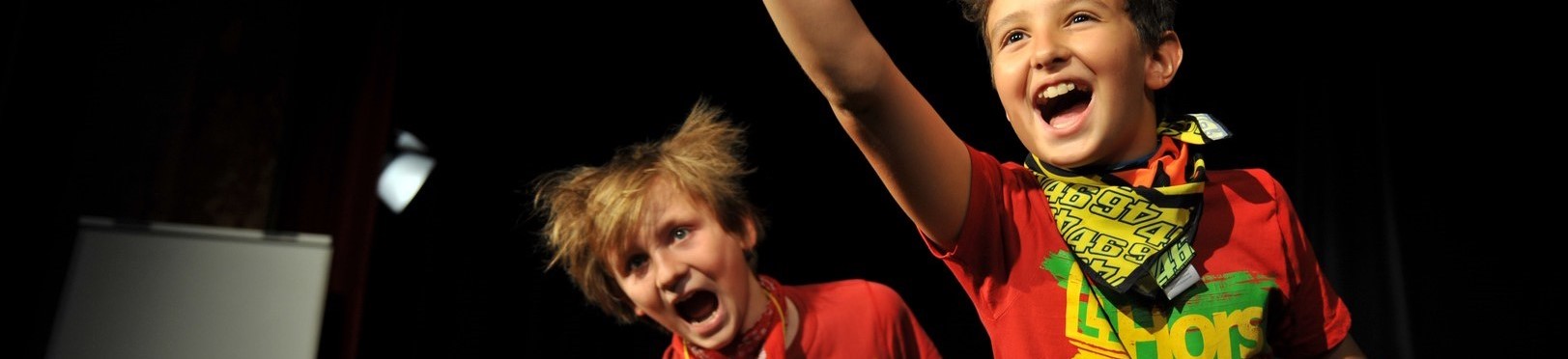
How close is Belmondo’s acting and way of life to what Professor Ivan Vyskočil brought into dramaturgy, pedagogy, creative work, and acting itself? The philosophy of play he drew from, and what he aimed to achieve through his pedagogy: that a human being becomes a playing being. Not meant in an infantile, pejorative, or vulgar sense, but as a deeply embodied way of playing. To be a life-long clown, a player, a spontaneous and unguarded child with an open heart and a certain playful mischief toward life.
Vyskočil required his students to read The Oasis of Happiness by the German philosopher Eugen Fink. A philosophical essay that reflects Fink’s understanding of creativity and life as such. All his students of authorial acting had to read it. They wrote various reflections and commentaries on it in order to at least partially understand what he was aiming at.
When Vyskočil was asked what Dialogical Acting, which he created, was for, he would answer: for nothing. For nothing? How many students were discouraged by this, how many gave up unnecessarily and avoided the possibility or the path of trying to be otherwise? To relearn what a person forgets when they change from a child into an adult.
Vyskočil’s answer “for nothing” seems to say: don’t do things for something. Don’t misuse or use things as a way of climbing toward something—whatever that might be. It is pointless. Try to be simple, like a child who is playing, who does not think about dignity, usefulness, merit, or abilities.
Belmondo lived, acted, and created in this way. That is why he was a brilliant actor. He could not be categorized or limited by stereotypes, fears, expectations, or the opinions of others. He simply existed—both in life and in his roles. This is also the pedagogical genius of Vyskočil: to create a space for people to be who they are in their deepest needs and identities.
I would like to see these two great figures side by side, Belmondo and Vyskočil. I would like to watch them argue, improvise, and fool around. A world would probably open up for me that would feel more real than truth itself. Sparkling, radiant, slightly chaotic, full of missteps—profoundly lighthearted and mischievous. A world with the smile and audacity of a clown laughing from ear to ear, with a joyfully cheeky expression, a wink, and a raised middle finger toward everything that is too serious, too formal, and pretending to be too important.
And so, even if they are probably laughing, making nonsense, and fooling around in theatrical heaven, their immediate approach to creation and life can still be an inspiration for us. So that one day we might be able to say: it was worth it. And to everything that appears too serious and important, they would laugh, wink at the audience, and raise, with all their love and warmth, a middle finger. C’est seulement la vie, c’est simplement un jeu.
Erika Merjavá